
English Phrases for Caregivers: 60 Useful Phrases with Audio

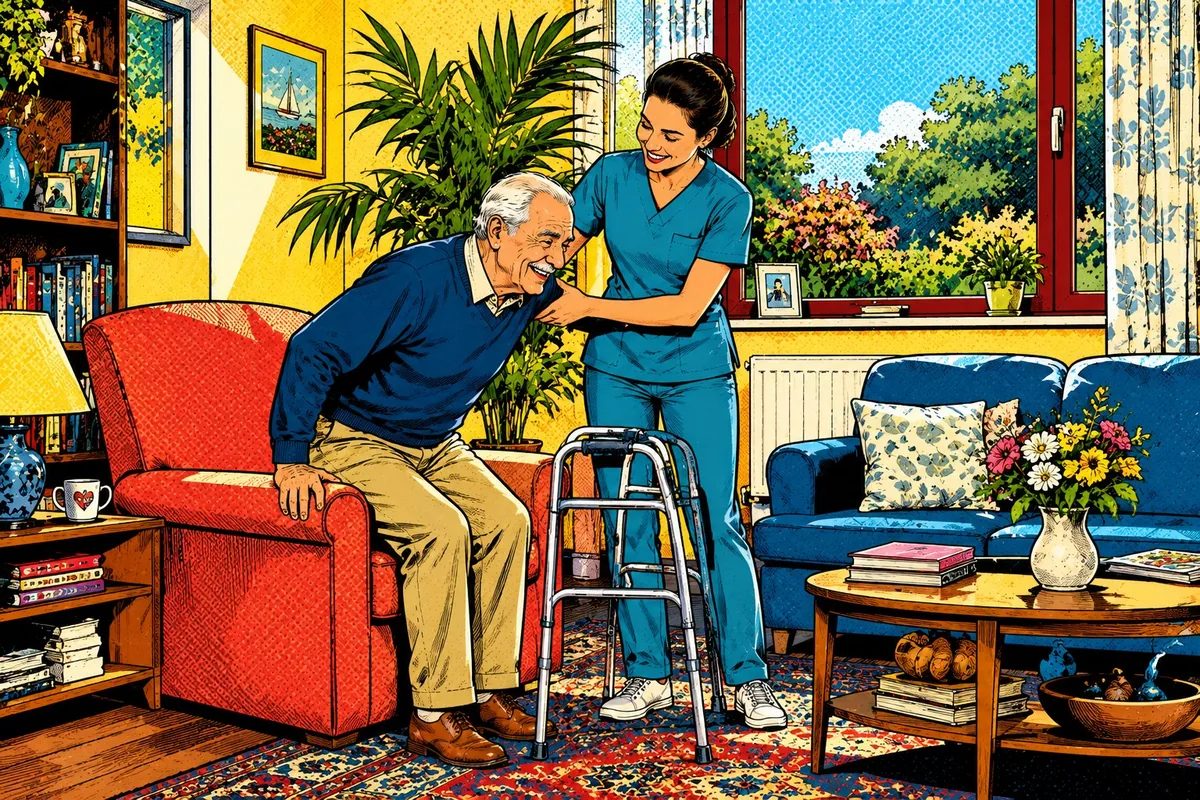
These 60 English phrases for caregivers cover the moments that fill a real workday: saying good morning, helping a client move, serving meals, giving medicine, calming someone down and updating the family. Every phrase has American English audio, so you can hear it, repeat it and use it at work tomorrow.
If you work as a caregiver, a home health aide or a nursing assistant, you already know the job. What is hard is finding the right words fast, in a kind and natural way. That is what this list is for.
How to use this list
Pick one situation a day. Tap the play button next to each phrase, listen, and say it out loud two or three times. Read the note to know when to use it. At the end, take the short quiz to check what you remember.
1. Greetings and the daily routine
Start every visit with a warm greeting. Clients feel safer when you tell them what is going to happen next.
- Good morning! How did you sleep? A friendly first question. It also tells you a lot about how your client is feeling today.
- It's me, Maria. I'm here to help you today. Say your name every time, especially with clients who have memory problems.
- How are you feeling this morning? Use it at the start of a shift. Listen carefully to the answer: pain, tiredness or mood.
- Let's get you ready for the day. A gentle way to start the morning routine: washing, dressing and breakfast.
- Would you like to take a shower or a bath today? Giving a choice helps clients feel in control. Choices make care easier.
- Which shirt would you like to wear? Let the client choose clothes when possible. It's a small thing that means a lot.
- First we'll wash up, and then we'll have breakfast. Explain the order of things. Wash up means wash your face and hands.
- It's time to brush your teeth. Clear and simple. Use "It's time to..." for any part of the routine.
- Do you need to use the bathroom? The polite, standard question in American English. Ask it often, especially before going out.
- I'll be back in five minutes. Always say when you will come back. It helps the client feel calm when you leave the room.
2. Mobility: moving safely
When you help someone move, short and clear instructions keep both of you safe. Say each step before you do it.
- Let's sit up slowly. Use it before helping a client sit up in bed. "Slowly" reminds them not to rush.
- Put your feet on the floor. The first step before standing. Wait until both feet are flat on the floor.
- On the count of three, we'll stand up. One, two, three. Counting helps you move together. The client knows exactly when to push.
- Hold on to the walker with both hands. A walker is the metal frame some people use to walk. Remind them to use both hands.
- Lean on me. I've got you. "I've got you" means I'm holding you and you're safe. Very comforting during a transfer.
- Take small steps. Small steps are safer than big ones, especially on a wet floor or in a small bathroom.
- Let's take a short break. Use it when the client looks tired or short of breath.
- Watch your step. There's a rug here. Watch your step means be careful where you walk. Rugs are a common reason for falls.
- Let me help you into the wheelchair. Always lock the brakes on the wheelchair before a transfer.
- Are you comfortable in this position? Ask after moving a client in bed or in a chair. Change the position if they say no.
3. Meals and drinks
Mealtime is also social time. These phrases help you offer choices and follow the client's diet.
- Lunch is ready. Would you like to eat at the table? Offer the table when possible. Eating with others is good for mood and appetite.
- What would you like for breakfast? Open question for clients who can choose. For others, offer two options instead.
- Would you like eggs or oatmeal? Two clear options are easier than an open question for many older adults.
- Careful, the soup is hot. A short warning before serving hot food or drinks.
- Let me cut that into smaller pieces for you. Smaller pieces help prevent choking. Say it kindly, not like an order.
- Try to drink a little more water. Older adults often forget to drink. Repeat this gently during the day.
- Are you still hungry? Ask at the end of a meal. Some clients won't ask for more on their own.
- You didn't eat much today. Are you feeling okay? A change in appetite can be a sign of illness. Ask, and write it in your notes.
- The doctor wants you to eat less salt. Use it to explain a diet rule. Mentioning the doctor helps avoid arguments about food.
- Would you like a snack? A snack is a small amount of food between meals, like fruit or crackers.
4. Medicine
With medicine, every word matters. Be clear about the time, the dose and how to take it.
- It's time for your medicine. The standard phrase. Say it the same way every day so the client recognizes it.
- Please take this pill with water. Use it for most pills. Give a full glass, not just a sip.
- This one is for your blood pressure. Tell the client what each pill is for. People take medicine more willingly when they understand it.
- You need to take it with food. Some medicines upset the stomach if taken on an empty stomach. Check the label or the chart.
- Have you taken your evening pills yet? Use "yet" in questions about something you expect to happen.
- Can you swallow it, or should I ask about a liquid? Some clients have trouble swallowing. Never crush pills without asking the nurse or pharmacist.
- Let me check your chart first. Always check the chart before giving medicine. This sentence also tells the client you are careful.
- Your prescription is ready at the pharmacy. A prescription is the medicine the doctor orders. In the US, you pick it up at the pharmacy.
- I'll set a reminder for your next dose. A dose is the amount you take at one time. Reminders help clients who forget.
- Tell me if you feel dizzy after taking it. Dizzy means you feel lightheaded or unsteady, or like the room is spinning. Ask clients to report new side effects.
5. Comfort and reassurance
Sometimes clients feel scared, confused or sad. A calm voice and the right words can change their whole day.
- Take your time. There's no rush. Use it when a client feels pressured or slow. It lowers stress for both of you.
- You're safe here. Short and powerful. Use it when a client is confused or afraid.
- I'm right here with you. Comfort during a hard moment, like pain, a bad dream or a medical test.
- Does it hurt anywhere? Ask this if the client looks uncomfortable. Then ask them to point to the place.
- On a scale of one to ten, how bad is the pain? Nurses and doctors in the US use this scale. One is a little pain and ten is the worst pain.
- Would you like another blanket? Older adults often feel cold. Offer before they have to ask.
- Let's turn on some music you like. Music can calm a client who is anxious or restless, especially in the evening.
- It's okay to feel that way. Use it when a client is sad or angry. You accept the feeling instead of arguing with it.
- You did a great job today. Praise after physical therapy, a walk or a hard shower. Encouragement keeps people trying.
- Let me know if you need anything. A warm way to end a conversation. Show where the call button is, too.
6. Talking to the family
Families want honest, simple updates. Start with good news when you can, then explain any concerns clearly.
- Your mom had a good day today. Start updates with good news. Families remember the first thing you say.
- She ate all of her lunch. Families always want to know about food. Specific details are better than "She's fine."
- He seemed a little tired this afternoon. "Seemed" means this is what you noticed, not a diagnosis. Good for small concerns.
- I noticed some swelling in her ankles. Use "I noticed" to report a change. Swelling should always be reported to the nurse, too.
- I wrote everything down in the notes. Tells the family that information is recorded and the next caregiver will see it.
- The nurse will call you about the test results. Caregivers usually don't give medical results. This phrase sends the question to the right person.
- Is there anything special you'd like me to do for him? Families know their loved ones best. Asking shows respect and builds trust.
- Would you like me to call you if anything changes? Offer to keep the family updated. Ask for the best number and time to call.
- She talks about you a lot. A kind detail that families love to hear, especially if they live far away.
- Please call me if you have any questions. End family conversations with an open door. Give your work number, not your personal one, if that's the rule.
What do caregivers say to clients every day?
Most of a caregiver's English is short and repeated: greetings, simple instructions and kind questions. If you learn ten phrases for each part of the day, you can handle most conversations at work. The rest comes from listening, which is why we also have caregiver English listening practice with three dialogues and answers.
How can I sound more polite in English at work?
Use "Would you like...?" to offer things, "Let's..." to do things together, and "Let me..." to offer help. These three starters sound kind and respectful, never bossy. Add "please" and the client's name, and you will sound natural and warm.
Quick quiz: test yourself
Want 20 more questions? They're in our free PDF, with 60 everyday words and audio.
Ready for more? English Listening Workbook: 30 conversations with audio at two speeds, exercises and an answer key.
Next steps
Phrases are the first step; understanding fast speech is the next one. Try the hospital visit listening test to hear a nurse talk to a family member, or see all our listening tests.